
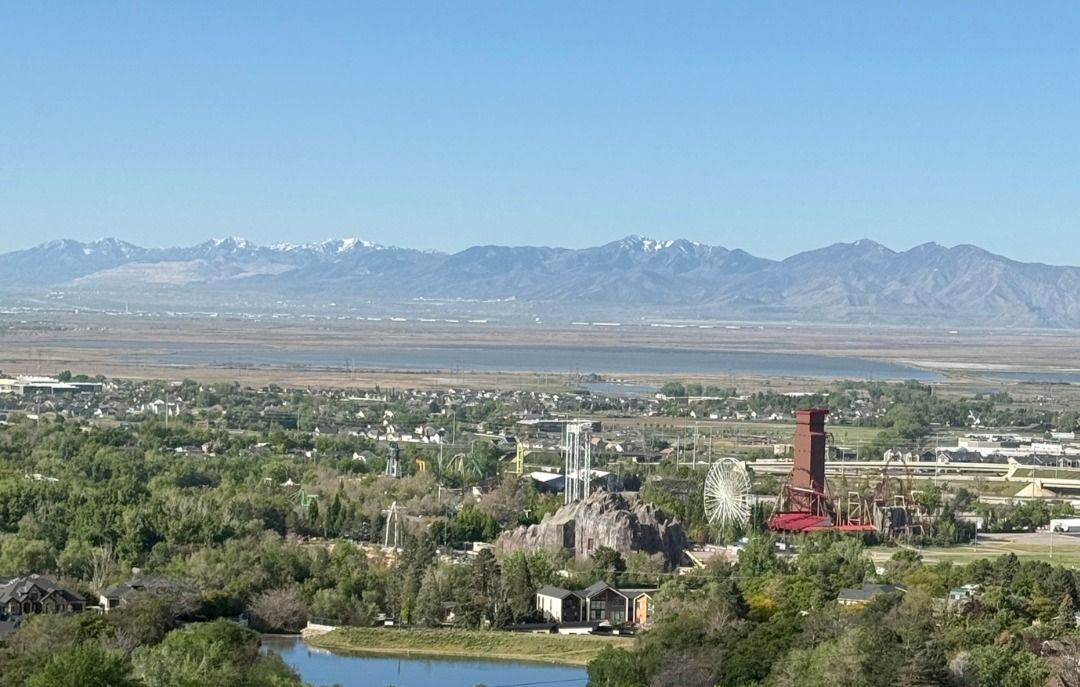


Farmington is the southern anchor of the service area, about 12 minutes south of Layton on I-15. It's also the most architecturally diverse city in the eight we cover. You've got 150-year-old historic homes along State Street, mid-century neighborhoods that filled in around Lagoon, mid-2000s subdivisions near Station Park, and brand-new construction along Shepard Lane and the western developments. Concrete work in Farmington means knowing which kind of property you're walking up to before you even reach the front door.
The local contractor we partner with handles the full range. From a careful tear-out on a 1920s home where the original concrete predates most of the surrounding neighborhood, to a clean new pour on a 2024 build off Shepard Lane, the project profiles vary enormously job to job.
The Farmington concrete spectrum
Most Davis County cities have one or two dominant concrete project types. Clearfield is mid-century end-of-life replacement. Syracuse is new-construction additions. Farmington has neither dominating because the housing stock is genuinely spread across four eras.
Pre-1950 historic homes make up a meaningful portion of central Farmington, especially along State Street and the older blocks east of Main Street. These properties often have driveways that have been replaced once or twice over the decades but still sit on lots that haven't been re-graded since the 1800s. The work here requires real care: mature trees with established root systems, narrow access between adjacent properties, irrigation systems that have been in place for fifty years or more, and sometimes underground oddities (old utility lines, abandoned cisterns, original cobblestone paths) that don't show up on any modern map.
Mid-century homes from the 1950s through the 1970s filled in around the original town as Farmington grew alongside Lagoon's expansion. The concrete on these homes is in roughly the same end-of-life condition as similar-era housing stock in Clearfield and central Kaysville. Driveway replacement, partial-panel repair, and apron work make up the bulk of the projects on these properties.
Mid-2000s development brought Station Park and the surrounding commercial-residential mix, plus a wave of subdivisions in the western half of the city. Original concrete on these homes is still inside its first lifecycle. Projects here tilt toward additions: patios, RV pads, decorative walkways.
The current new-construction wave is concentrated along Shepard Lane and the developments expanding west toward the wetlands. Big lots, big driveways, lots of stamped concrete and outdoor living build-outs. Project profiles here look similar to Syracuse new construction.
The result is that a Farmington quote could be a 1925 historic home needing careful work around 100-year-old trees, or a 2024 new build needing a stamped patio and a fire pit pad. Both are part of the regular workload.
Common projects in Farmington
Driveway widening and replacement on the older historic homes near State Street. Many of these have original narrow driveways that don't accommodate modern two-car households. Widening to current standards while respecting the property's character is one of the more common project types here.
Concrete repair for slabs that aren't ready for full replacement. The same partial-panel and polyurethane foam leveling work that's standard in Clearfield gets used here too, just on a wider mix of property ages.
New driveway pours for new construction along Shepard Lane and the western subdivisions. Larger jobs typical of new-build sizes.
Stamped concrete patios on the newer subdivisions, often with builder-coordinated outdoor living packages. Wood-plank and flagstone stamps are most requested.
Sidewalk and walkway work on the historic district properties, where city right-of-way notices and trip-hazard repairs come up regularly. The mature trees that give those neighborhoods their character are also what's lifting and cracking the sidewalks.
Plain concrete patios across the city for homeowners who want outdoor space without the stamped premium.
Neighborhoods and areas of Farmington we serve
The historic district along State Street and Main Street. Pre-1950 homes, mature landscaping, narrow lots and tight access. Driveway widening, apron replacement, and walkway work make up most of the projects here. Coordination with the existing landscape is the defining challenge.
The neighborhoods around Lagoon and the central established residential zone. Mid-century homes from the postwar growth around the amusement park. Replacement driveways, partial-panel repair, and patio additions are common.
Station Park and the surrounding mid-2000s development. Newer-construction homes with original concrete still in good shape. Project types skew toward outdoor living additions and decorative work.
The Shepard Lane corridor and western new construction. The newest growth in the city. New driveway pours, stamped patios, RV pads, and full outdoor living build-outs. These are some of the larger projects in the service area.
The bench-line homes east of the freeway. A mix of older established and newer infill development on the slope rising toward the Wasatch. Drainage planning matters more on sloped lots, which is part of every quote in this zone.
The Centerville and Fruit Heights borders. Farmington blends into both neighboring cities along its north and south edges. Projects on the border streets often look similar to whichever neighboring city's profile they're closer to.
If your home is anywhere within Farmington city limits, you're within the service area.
Working around mature landscaping in the historic district
This deserves its own section because the historic parts of Farmington are unlike anywhere else in the service area.
A 1920s home on State Street with a brick walkway, a 90-year-old elm tree in the front yard, and an original wrought-iron fence isn't a standard concrete job. It's a careful coordination problem. The trees alone are often the limiting factor: root zones extend well beyond the visible canopy, and damaging structural roots during demolition or excavation can stress or kill a tree that took a century to grow. The wrought-iron and stonework details have to be protected during demolition, sometimes physically wrapped or temporarily relocated. The irrigation systems on these properties are often half a century old and not on any current map, which means utility locates and careful exploratory digging before any tear-out begins.
The contractor we partner with does this work routinely, but it takes longer than a comparable job on a 2010 subdivision lot. A historic district driveway replacement that would take 4 days on a standard property might take 6 or 7 days because of the prep, protection, and careful sequencing required.
The trade-off is usually worth it. When the work integrates with the property's existing character, the result looks like it's always been there. When it doesn't, it looks like a 21st-century contractor steamrolled a Victorian-era property, and that's the kind of mistake that's permanent.