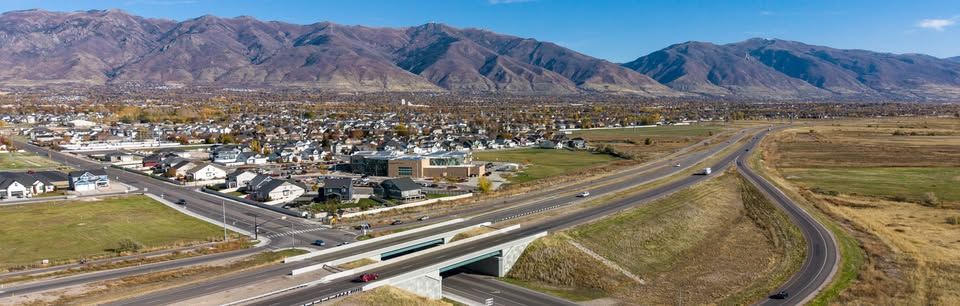


Kaysville is the city right at the southern edge of the service area, just five minutes south of Layton on I-15. It's also one of the more interesting cities to work in from a concrete standpoint because the project mix here is genuinely split. Half the work is tear-and-replace on older driveways near Main Street and Mutton Hollow Road. The other half is brand-new stamped patios and outdoor living slabs in the newer Kays Creek and Westside Highway subdivisions. Same city, two very different jobs.
We service Kaysville as part of the same operational footprint as Layton, with the same Layton-based contractor handling the work. A quote request from a Kaysville address typically gets a same-day response and a site visit inside the same week.
What's different about concrete work in Kaysville
A few things make Kaysville its own thing, distinct from a generic Davis County job.
The first is the housing stock split. Kaysville's older homes near Main Street, Mountain Road, and the historic district date from the early 1900s through the 1970s, often on lots that were divided and redivided as the town grew. Driveways here are frequently original or near-original, which means 1970s-or-older concrete that's reaching end-of-life. Tear-out and replacement is the norm rather than the exception, and a fair amount of the work involves coordinating around mature landscaping, narrow access, and the occasional surprise underground utility line that wasn't on any map.
The newer side of Kaysville is essentially a different city in terms of concrete work. Kays Creek, the developments along Angel Street, and the newer phases off Westside Highway are full of homes built between roughly 2005 and the present. The original driveways are still serviceable on most of these, so projects here skew toward additions and upgrades. Stamped patios off the back doors are the single most-requested project, often with a fire-pit pad and a matching walkway as a package. Wood-plank and random-slate stamp patterns dominate the requests, sometimes with a color hardener applied for depth.
The second thing worth knowing: Kaysville's right-of-way permit process runs slightly slower than Layton's. If a project touches the public sidewalk, the apron, or anything in the city's right-of-way, the permit needs to be pulled in advance, and the city engineering department's review cycle is typically a few business days longer than Layton's. The contractor pulls these permits as part of the quote process, so it's not something you have to handle yourself, but it does mean projects that involve the apron or sidewalk transition need a slightly longer lead time on scheduling. Worth knowing if you're trying to time a pour around a specific weekend or event.
Common projects in Kaysville
The most common work, in rough order of frequency:
- Driveway tear-out and replacement on the older homes in the central and east-side neighborhoods. Original 1960s and 70s slabs that are cracked, heaved, or scaled past repair. Replacement is usually a one-day pour plus a week of cure before vehicle traffic.
- Stamped concrete patios in the newer subdivisions. Kays Creek and the Westside Highway area get a lot of these. The typical job is a 300-to-500 square foot patio with a wood-plank or flagstone stamp, sometimes with a built-in border for a fire pit or hot tub pad.
- Concrete patios in plain broom-finish or exposed aggregate, often for homeowners who want the outdoor living space without the stamped premium.
- Concrete repair for slabs that aren't ready for full replacement. Joint resealing, polyurethane foam leveling for settled sections, surface grinding for trip hazards, and crack repair on otherwise-sound slabs.
- Apron and sidewalk replacement when city right-of-way maintenance has chewed up the edge of a driveway or when the homeowner has gotten a sidewalk repair notice from the city. This is where the permit process becomes relevant.
Neighborhoods and areas of Kaysville we serve
The Main Street and historic district corridor. Older homes, mature trees, original concrete reaching end-of-life. Driveway tear-outs and apron work dominate. Tight access and careful coordination around landscaping are part of every job in this zone.
Mutton Hollow Road and the surrounding established neighborhoods. A mix of mid-century and 1970s-era homes. Driveway replacement and stamped patio additions are roughly evenly split here.
Kays Creek and the eastern new-construction phases. Newer homes from the past 15 to 20 years. Original driveways are typically still serviceable, so the work skews to outdoor-living additions: stamped patios, fire pit pads, RV pads, accent walkways.
The Angel Street corridor. A mix of established and newer construction. The newer townhome and small-lot developments occasionally need creative pour planning for tight spaces, narrow driveways, and shared property lines.
Westside Highway and the western newer subdivisions. Wide lots, generous setbacks, and homeowners building out backyards over time. Patios are the dominant request, often as the second or third concrete project a homeowner has done on the same property.
Fruit Heights border and the southern edge. Technically a separate city, but the bench-line homes on the south end of Kaysville and the north end of Fruit Heights share the same general project profile: older established, larger lots, mature trees, occasional sloped-driveway projects that need real drainage planning.
If your home is anywhere within Kaysville city limits, you're squarely in the service area.
A note on coordinating with mature landscaping
This is the unsung complication of Kaysville work that doesn't show up on a generic concrete contractor website. The historic and established parts of Kaysville have a lot of mature trees, original landscaping, and irrigation systems that have been in place for decades. A driveway replacement in this part of town isn't just "tear out the old, pour the new." It involves protecting tree root zones during demolition, coordinating around drip-line irrigation that runs under or alongside the driveway, and sometimes adjusting the new pour's edge or thickness to avoid disturbing a tree that the homeowner wants to keep.
The contractor we partner with handles this stuff routinely, but it does mean a job in central Kaysville might take a half-day or full day longer than the same square footage in a new-construction subdivision. The trade-off is usually worth it because the resulting work integrates with what's already there instead of starting from scratch.